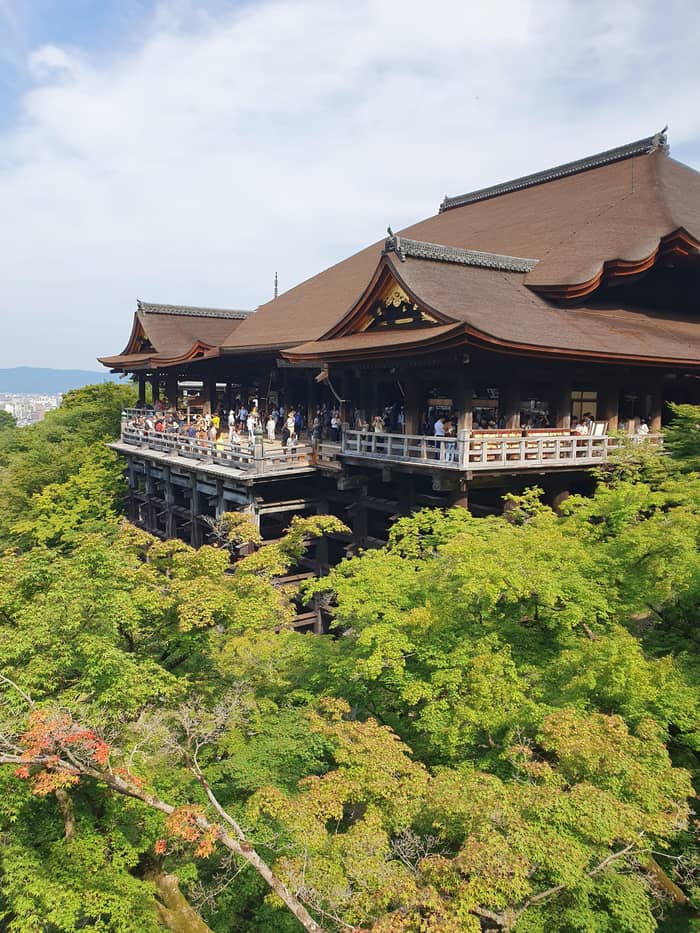
Cheapest
Self-guided
Train and trail
- EntryNo ticket listed
- TimeA 2 to 3-hr climb
- GuideNone
Guides
Language
Currency
Look up datestickets from $97 · no-fee cancellationFind it on the map
Answer in brief
Fushimi Inari shrine lists no ticket for the grounds and is never closed to the public, and the JR ride from Kyoto Station takes about 5 to 9 minutes.
Fees, hours, access
42 spots on the map
Select a district, then a marker or a name to read about it and open directions.
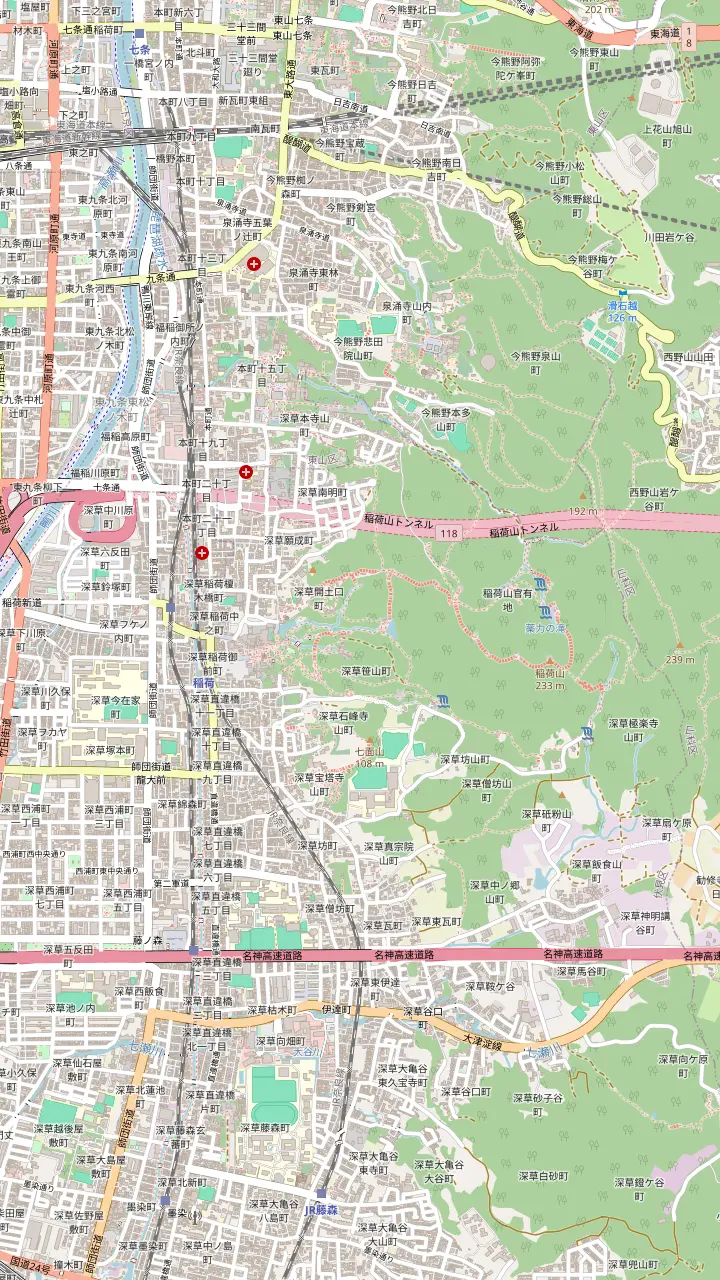
Local Nara Line trains stop here; JR West warns that express trains do not.
The shrine is a 5 minute walk east of the station; limited express trains do not stop here.
Said to have been built by Toyotomi Hideyoshi in 1589.
Rebuilt in 1499 and a designated Important Cultural Property.
JNTO describes a row of 1000 scarlet torii along a 4 km path.
Moved to its current location in 1975.
At the pond tradition says clapping echoes from the direction where a lost person can be found.
The highest peak of Inariyama at 233 m.
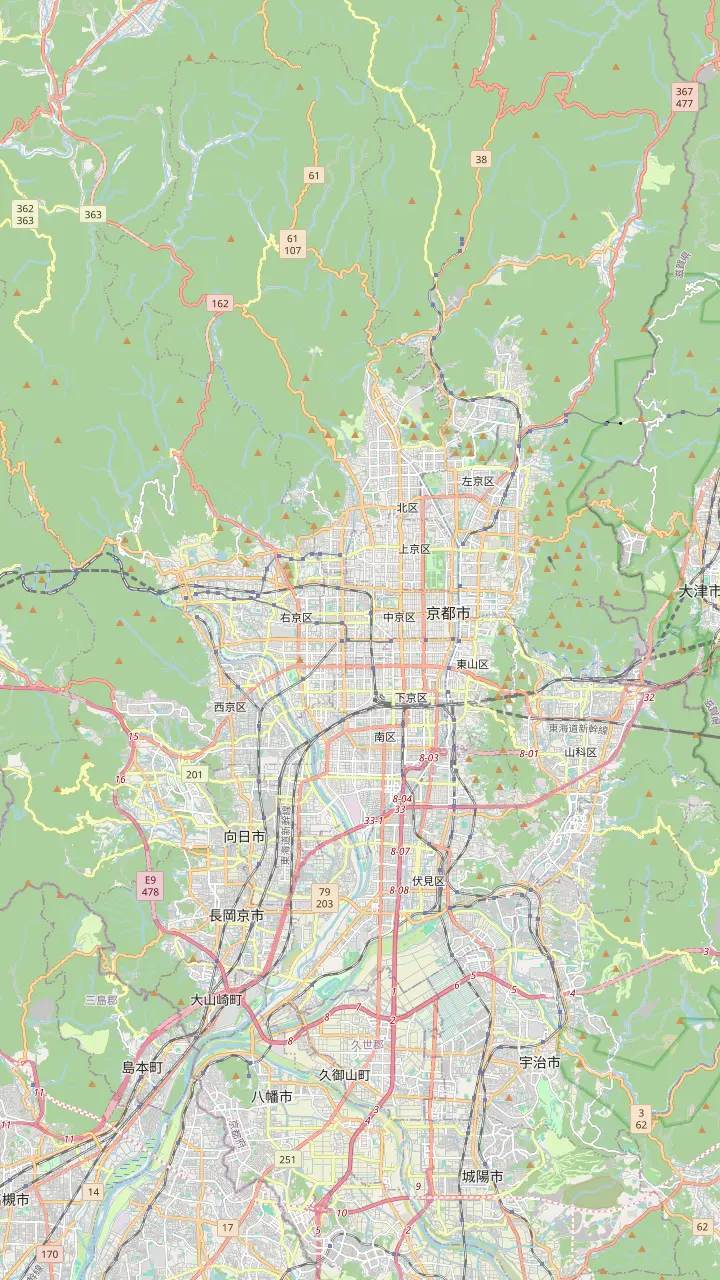
The Nozomi bullet train takes approximately 130 minutes from Tokyo Station to Kyoto Station.
Google MapsBeside Inari Station on the JR Nara Line, 2 stations and 5 minutes from Kyoto Station, per the shrine.
Google MapsFounded in 778; it opens at 6:00 a.m. every day.
Google MapsGion grew up as a gate town in front of Gion Shrine, now called Yasaka Shrine.
Admission is 1,000 yen for adults, and a visit usually takes about 30 minutes.
Open 9:00 a.m. to 5:00 p.m. all year round, with admission of 500 yen for adults.
Google MapsCastle admission is 800 yen for adults; it was completed in 1603.
Google MapsAdmission is free, and the palace is closed on Mondays.
The JR Sagano Line Rapid Service takes about 11 minutes from Kyoto Station to Saga-Arashiyama Station.
Google Maps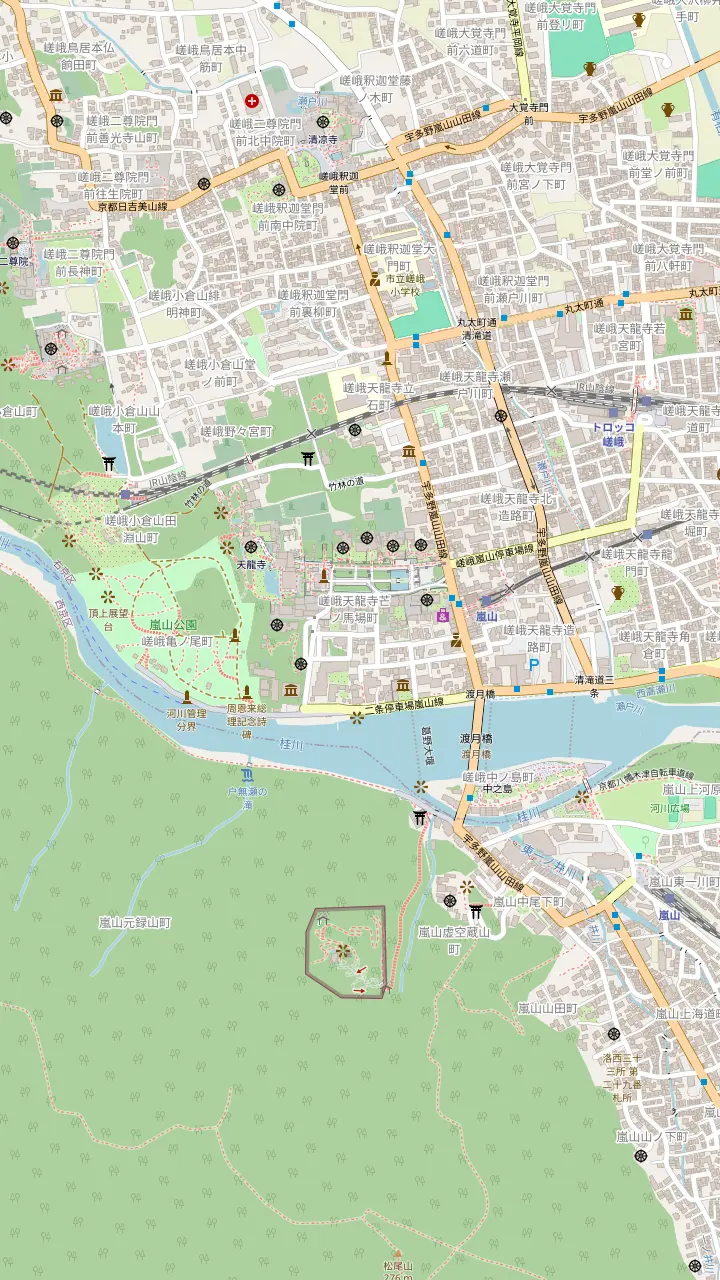
The bamboo grove is a 10-minute walk from this station.
Google MapsTenryu-ji is a 5-minute walk from Randen Arashiyama Station.
Google MapsFirst built in 836; the current bridge was finished in 1934.
Opens 8:30am to 5:00pm; garden-only admission is 500 yen for adults.
Entry is free.
The grove lines a 400 meter path between Nonomiya Shrine and Okochi Sanso Villa.
Admission is 1,000 yen for adults and includes matcha and sweets.
Admission is 800 yen for adults, cash only; the climb to the monkeys takes about 20 minutes.
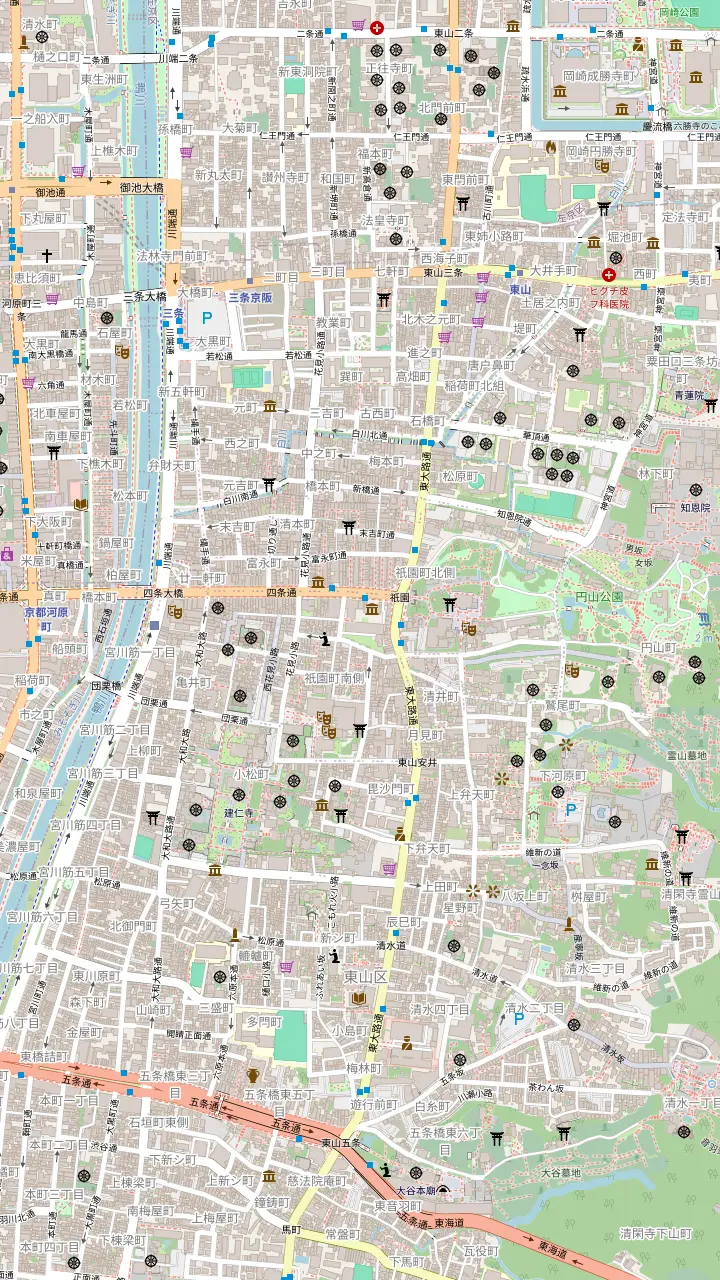
From the station walk east along Shijo to Hanamikoji Street and straight down it to reach Kennin-ji.
The meeting point of the 100-minute Gion night walk limited to 10 people.
Runs between Sanjo and Shijo streets; its history as an entertainment district goes back to 1670.
A 2-hour guided walk lists Shirakawa Lane and Tatsumi Bridge as its first stops.
Has no formal sidewalk, but different stones in the center and at the sides mark where pedestrians should walk.
Outside its winter schedule, regular shows start every day at 6:00 pm and 7:00 pm and last about 50 minutes.
Admission is 800 yen for adults; visitors are accepted from 10:00 a.m.
The shrine office is open 9:00 to 17:00.
Admission is 800 yen for adults, with daytime hours of 9:00 am to 5:00 pm.
Each March the park becomes a lantern festival with thousands of lanterns.
The observation deck is open 10:00 to 21:00 with last admission at 20:30.
Kamogawa Noryo Yuka riverside dining runs from May 1 to October 15.
After dark the stones of Hanamikoji are lit with lantern light.
The temple holds its special night viewing three times a year.
Google MapsThe Special Autumn Nighttime Viewing and Illumination runs from 23 Oct to 13 Dec 2026.
The 2026 cherry blossom light-up ran from 6 p.m. to 10 p.m., with last entry at 9 p.m.
Google MapsJR West notes that the shrine is never closed to the public.
Google MapsCartography © OpenStreetMap contributors
Fushimi Inari Taisha sits at the foot of a wooded mountain in south Kyoto. Here is what the shrine is, what it costs to enter (Fushimi Inari Taisha tickets are not sold for the grounds), how to reach it and how far up the gates you should walk.
Editorial team, kyotoactivities.com · Updated November 2, 2026 · About 8 minutes of reading
Essentials first
Fushimi Inari Taisha is the head shrine to which every other Inari shrine is affiliated, and the shrine's own site says there are said to be about 30,000 of them across Japan.7,8 People have gathered here to pray for bountiful harvests, business prosperity and the safety of home and family since the shrine was established in 711.9 That is why you meet shopkeepers and company groups on the path as often as sightseers.
The name Inari comes from the phrase ine ga narimashita, meaning rice has grown, and the deity Inari Okami is thought to dwell in the cedar trees of the mountain.10,11 The whole of Inariyama counts as part of the shrine, which is why the precinct totals around 870,000 square meters rather than the few courtyards you see from the station.12,13 Walking uphill here is walking inside a shrine, and that is the right frame of mind.
The colour has a reason too. Vermilion is considered an amulet against evil forces.14 The stone foxes along the way are messengers of Inari Okami, who is not herself a fox, and the object in a fox's mouth is often a key to a granary.15,16 Once you know that, the statues stop looking like decoration and start reading as a short story about rice.
Routes
| Start | Route | Time | Catch |
|---|---|---|---|
| JR Kyoto Station | JR Nara Line to Inari | 5 to 9 minutes | Local trains only |
| Gion-shijo | Keihan to Fushimi Inari | About 22 minutes | Not the limited express |
| Fushimi Momoyama | Keihan to Fushimi Inari | Around 15 min | Brewery district |
| Bus Minami 5 | Inari Taisha-mae stop | 7 minutes on foot | Slowest of the options |
| Meishin Expressway | Kyoto Minami interchange | Around 20 min by car | Parking is crowded |
Times are those the shrine, JR West and the Kyoto City Tourism Association publish; the JR figure differs between them.3,4,26,35,31,32
The simple way in is the JR Nara Line. Board a local train at platform 8, 9 or 10 of Kyoto Station and get off at Inari Station, two stops away.17,3 JR West is clear that express trains do not stop there, so check the display before you step on.18 The shrine gives the ride as about 5 minutes, the Kyoto City Tourism Association as about 9; plan for the longer figure and be pleasantly surprised.3,4
From the Gion and Shijo side, the Keihan Main Line is the alternative. Gion-shijo to Fushimi Inari Station takes about 22 minutes, and the shrine lies a 5 minute walk east of the station, though JNTO rounds that up to 7.26,27,28 Limited express trains on the Keihan line skip the station, while express, sub-express and local trains stop.29,30 On the Keihan line, in other words, a limited express is the wrong train even though it is the fast one.
Buses and cars are the weaker options. The Inari Taisha-mae stop on the Minami 5 city bus line is a 7 minute walk from the shrine, and by car the shrine is around 20 minutes from the Kyoto Minami interchange on the Meishin Expressway.31,32 The shrine itself recommends public transport because the parking areas around it are very crowded.33 If you came with a driver or a coach tour, the stop is short and the mountain deserves more than the minutes you get.
Counting the gates
The Fushimi Inari shrine entrance fee is the first thing to settle, so here is the plain answer. No ticket is listed for the grounds either. The shrine's own pages and the Kyoto tourism association's pages list no admission charge or ticket for walking the grounds and the mountain. JR West adds that the shrine is never closed to the public, and JNTO says it can be visited at any time of day.2,39 Money goes on amulets, snacks and the tour you choose, not on a gate.
The one paid item the city itself runs is the guided tour. The Kyoto City guides lead a 60-minute English tour of the shrine, departing at 10 AM and 11:30 AM on days without shrine events, for 4,000 yen per person.38,40,1 An hour is enough for the buildings and the first stretch of torii, and a guide explains the symbols you would otherwise only photograph.
Companies sell bigger packages around the shrine. The one-day bus tour this site books spends 1 hour at Fushimi Inari Taisha among eight named stops and costs from $97. An early-morning small-group train tour, limited to 8 people, gives 70 minutes here at the start of a six-hour day from $90. For a late hour on the mountain, a 2-hour night walk meets at the fox statue at the main entrance from $41.
Which hour suits you
The shrine is never closed, so the real choice is when to arrive.
If I want few people around
As the sun rises
JNTO suggests early morning when fewer people are around.36
If I want a different mood
Once night falls
JNTO also points to after dark, when the shrine is lit up.36
If I want to eat on the way
Late morning to mid-afternoon
JNTO recommends this window with a light lunch on the hike.37
If I want it explained
The city guides' hour
If I have only a short stop
Gates and main hall
Do it your way
Cheapest
Train and trail
Official
Kyoto City tour
Evening
Evening walk
It is easy to hurry past the front of the shrine, which is a pity. The Romon gate is said to have been built by Toyotomi Hideyoshi in 1589, paid for with a pledge of 10,000 goku of rice he made to Inari Okami if his ill mother recovered.19,85 The main shrine building was rebuilt in 1499 after a fire in the Onin Rebellion, and it is a designated Important Cultural Property.20,54
The main hall houses five shrines together: lower, middle, upper, plus Tanaka and Shino-Okami.86 Its walls are 10.6 m high on either side and it is built in the Uchikoshi Nagashi-zukuri style.87 Stand a moment at the offering box and watch how people pray; a bow, two claps and a bow is the usual pattern, and the line moves faster than it looks.
The gap between dates tells its own story: the shrine dates from 711 and celebrated the 1300th anniversary of its deity's enshrinement in 2011, yet the main building dates from 1499 and the Romon gate is said to date from 1589.9,88,20,19 This is a place that has been rebuilt and re-gifted many times, and the red you see is the product of that continuing habit of donation.
Cost compare
Enter your group size and see what each tour costs in total.
4 options side by side
Enter your group size and see what each tour costs in total.
≈
View≈
View≈
View≈
ViewLowest GetYourGuide prices at the ECB reference rate; the exact amount appears when you book.
The visit, step by step
Platform
Board a local Nara Line train at platform 8, 9 or 10; express trains skip Inari Station.17,18
First, the gates
The Romon is said to date from 1589; the main building from 1499.19,20
Behind the hall
A row of 1000 scarlet torii along a path of 4 km.21
Down in the valley
About halfway
The junction looks over Kyoto.24
Up at the peak
The highest peak of Inariyama.25
Behind the main hall the path divides into two tunnels of gates, the section the shrine calls the Senbon Torii. JNTO describes a row of 1000 scarlet torii along a 4 km path.21 The shrine counts around 10,000 torii of all sizes across the whole mountain, while the Kyoto City Tourism Association speaks of over 5000 orange gates behind the shrine; official counts differ, so treat any single number as approximate.5,34
The Fushimi Inari torii gates are gifts. Worshippers have donated torii since the Edo period, and torii were widely used as offerings by the start of that era.89,90 Look at the back of the nearest gate and you will see the name of the donor and a date; each gate is a separate gift.
The first major stop is Okusha Hohaisho, also called Okuno-in, in the Myobu-dani valley at the end of the Senbon Torii.22 Behind it are the Omokaruishi lanterns: lift the top of a lantern, and if it feels lighter than you expected your wish will come true.23 Farther on, at the pond by Kumatakasha, tradition says that clapping echoes back from the direction where a lost person can be found.56 Photographers should note that blocking worshippers on narrow paths is prohibited.91
Video
Ookini KYOTO - mochi & mah on YouTube · The player connects to YouTube only after you tap.
You can also visit early in the morning when fewer people are around, or after dark when the shrine is lit up, for a different kind of experience.
Checklist
The shrine publishes a short list of requests for all visitors. Eating or drinking outside marked free rest areas, including while walking or standing, is prohibited.92 Flying drones is prohibited on the grounds, bringing pets is prohibited except for guide dogs and other necessary animals, and smoking and fires are prohibited.93,94,95
Costume is covered as well. Walking the grounds in wedding dresses or in costumes unsuitable for worship is prohibited.96 That rule matters on a street full of rental kimono: a kimono is welcome, a photo-shoot gown is not. Carry your rubbish out with you, and keep snacks for the rest areas where they are permitted.
Halfway up, JNTO mentions a souvenir shop and tea stall where you can buy snacks, drinks and ice cream, and the shrine has opened a rest area, Teichoan, with a cafe and terrace beside Yashimagaike Pond, built in December 2017.97,98 These are the places where the no-eating rule relaxes, and they are good places to let a group regroup.
FAQ
Eating or drinking outside marked free rest areas, including while walking or standing, is prohibited.92
JNTO says it takes between two and three hours to tour the mountain.6
In January 2025 the Kyoto City Tourism Association reported heavy crowding and pointed visitors to its congestion forecast and live camera.101
Sources
Questions about Kyoto or the tours? Ask a person here.